For most lifters returning from a lumbar strain, disc bulge, or facet irritation, the trap bar (hex bar) deadlift is the safer pull. The trap bar vs straight bar deadlift back injury question almost always lands on the hex bar because the load sits in line with your center of mass, which reduces shear force on the lumbar spine, lets you stay more upright, and shifts demand from the spinal erectors toward the quads and glutes. A straight bar is not banned forever—it still has a place once you rebuild capacity—but as a return-to-lifting tool in 2026, the trap bar wins on biomechanics, learning curve, and tolerance to less-than-perfect bracing.
How bar position changes the load on your lumbar spine
The single biggest difference between the two lifts is where the bar sits relative to your hips. A straight barbell rests in front of your shins, so the bar's path has to travel around your knees. That forces you into a more horizontal torso angle at the start of the pull and creates a longer moment arm between the load and your lumbar vertebrae. The longer that moment arm, the more shear force your erectors and posterior ligaments have to resist. For a previously injured low back, that shear is the variable that decides whether tomorrow's flare-up happens.
When shopping for trap bar vs straight bar deadlift back injury, it pays to compare specs, capacity, and real-world runtime before committing.
A trap bar puts you inside the load. The handles sit at hip-line, the weight is roughly aligned with your center of mass, and the moment arm to the lumbar spine collapses by several inches. Peer-reviewed biomechanics work (Swinton et al., 2011, and several follow-up EMG studies through 2024) consistently shows lower lumbar erector activation and lower L4/L5 shear in the hex bar pull at matched loads. You also tend to start with a more vertical torso, which means the lift behaves more like a hybrid squat-deadlift than a pure hip hinge. For a lifter with a cranky low back, that hybrid pattern is a feature, not a bug.
Shear, compression, and why "compression isn't the enemy"
A common confusion: people hear "the trap bar reduces spinal load" and assume it makes the lift easier on the back in every way. Not exactly. Total compressive load at the lumbar spine can be similar between the two lifts at the same weight. The trap bar specifically reduces shear—the sliding force across vertebrae—which is the force most associated with disc and facet pain in deadlift mechanics. Compression, especially axial compression with a braced trunk, is actually well-tolerated by healthy discs and is part of how connective tissue rebuilds capacity. The trap bar lets you load compression with less of the shear that aggravates an injury. That trade-off is exactly what most rehab programs are trying to engineer.
When the straight bar is still the right answer
The trap bar wins for return-to-lifting, but the straight bar isn't a villain. Keep it on the menu if:
- You compete in powerlifting and need straight-bar specificity. The sumo or conventional pull is the test, so once you're symptom-free, you have to rebuild it.
- You're already 8–12 weeks pain-free, your erector capacity is rebuilt, and your bracing under load is automatic. At that point the straight bar deadlift is just another tool.
- You're using it from a deficit or rack pull height that you've validated doesn't reproduce symptoms. Shortening the range or starting above the knee can sidestep the worst shear angles entirely.
The mistake injured lifters make is treating "trap bar vs straight bar deadlift back injury" as a permanent identity choice. It's a phase choice. Most lifters with a history of low-back pain end up doing the bulk of their volume on the hex bar and rotating straight-bar work back in as an accessory once tissue capacity is rebuilt.
A return-to-deadlift template that actually works
Here's the progression that physical therapists and strength coaches have converged on over the last few years:
- Weeks 1–3: Hip hinge pattern only—no axial load. Glute bridges, bird dogs, McGill big three, banded hinge drills.
- Weeks 3–6: Light kettlebell or dumbbell Romanian deadlifts, 3 sets of 8–10, no closer than RPE 6. You're rebuilding pattern, not pushing weight.
- Weeks 6–10: Trap bar deadlifts from blocks (handles elevated 2–4 inches), 3 sets of 5 at RPE 6–7. Elevating the handles shortens the range and keeps your spine in a more neutral position at the bottom.
- Weeks 10–16: Trap bar from the floor, building back to working weights. Stay at RPE 7 or below for at least four weeks before chasing PRs.
- Week 16+: Reintroduce straight-bar work as an accessory, starting from a rack-pull height and lowering the pins over weeks. Keep the trap bar as your primary heavy day for at least another training block.
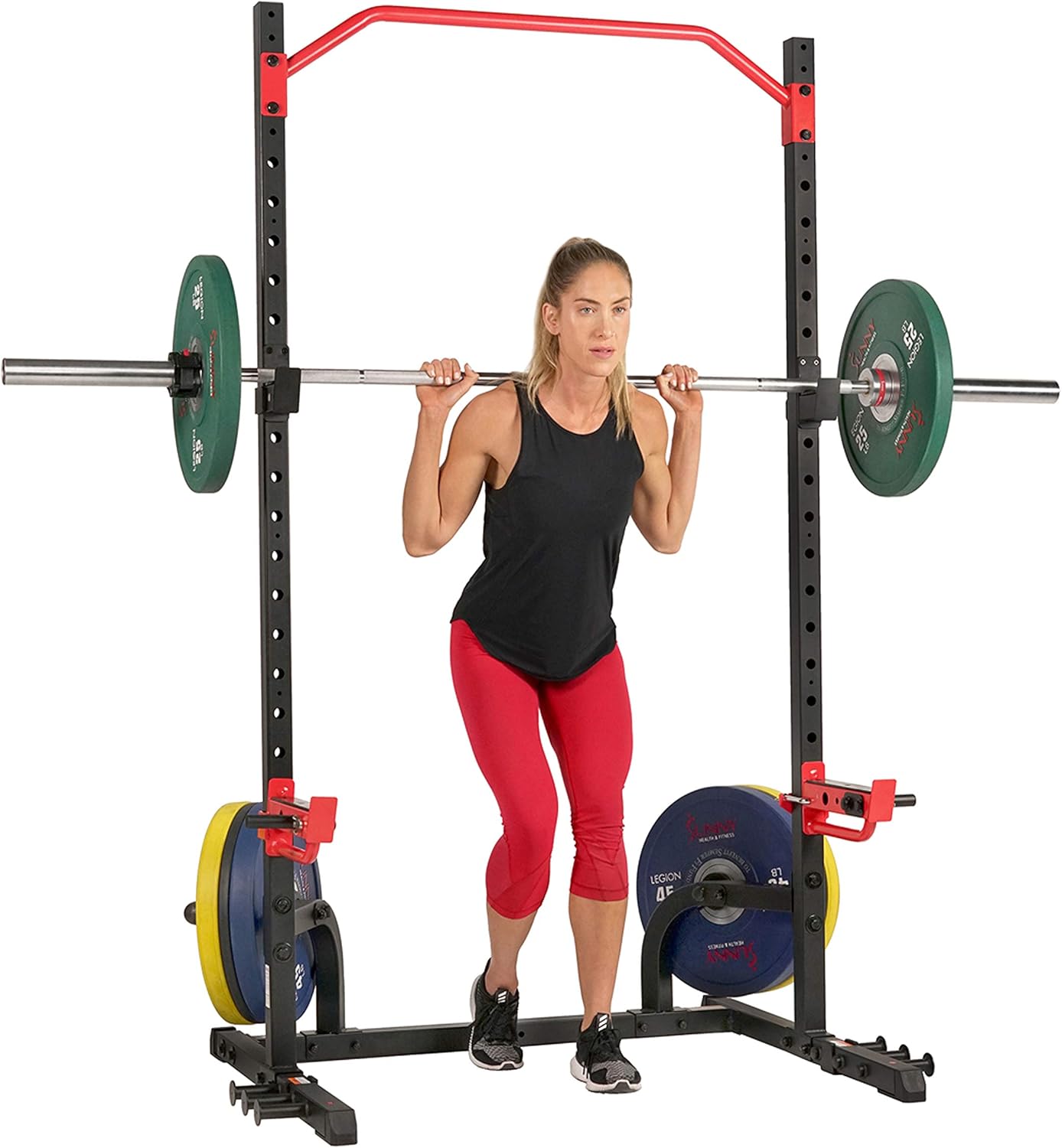
If you're building a home setup around this plan, see our companion piece on power racks with safety spotter arms—the ability to bail safely matters more than any single bar choice.
Dumbbell-based hinge work for the rebuild phase
For weeks 3–6 of the progression above, and as ongoing accessory work even after you're back to barbell lifts, adjustable dumbbells are the single most useful piece of home equipment for a lifter rehabbing a low back. They let you load Romanian deadlifts, single-leg RDLs, B-stance deadlifts, suitcase carries, and Jefferson curls without committing to barbell axial load. The unilateral variants in particular are gold for rebuilding the deep hip stabilizers that often shut down after a back injury.
You want a pair that goes heavy enough for hinge work specifically—most people will outgrow 25 lb dumbbells within a few weeks of RDLs. A range topping out at 50–90 lb per hand is the sweet spot. Below are three picks that fit the bill for back-rehab loading.
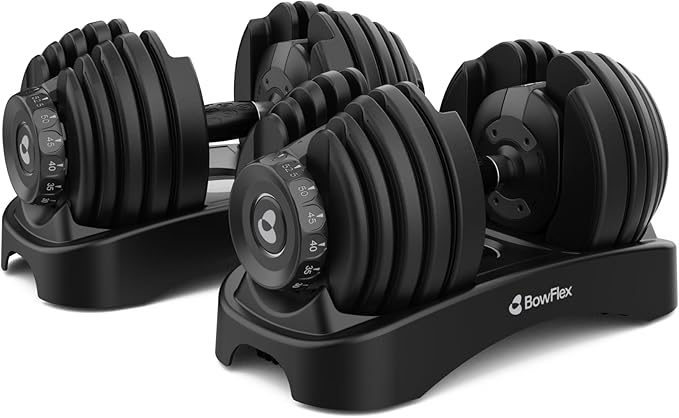
BowFlex Results Series SelectTech Adjustable Dumbbells
The Results Series is BowFlex's 2025/2026 update to the classic SelectTech line, with a redesigned dial that's faster to spin and a more secure weight-plate engagement. The handles are knurled rather than smooth plastic, which matters when your grip is the limiting factor on heavy RDLs. The weight range scales up high enough to keep loading hinges for the long haul, and the footprint is small enough to live in a corner of a home gym. For a rebuild phase where you'll be doing high-rep, moderate-load posterior chain work, this is the most quality-of-life option in the category. Check the BowFlex Results Series on Amazon.
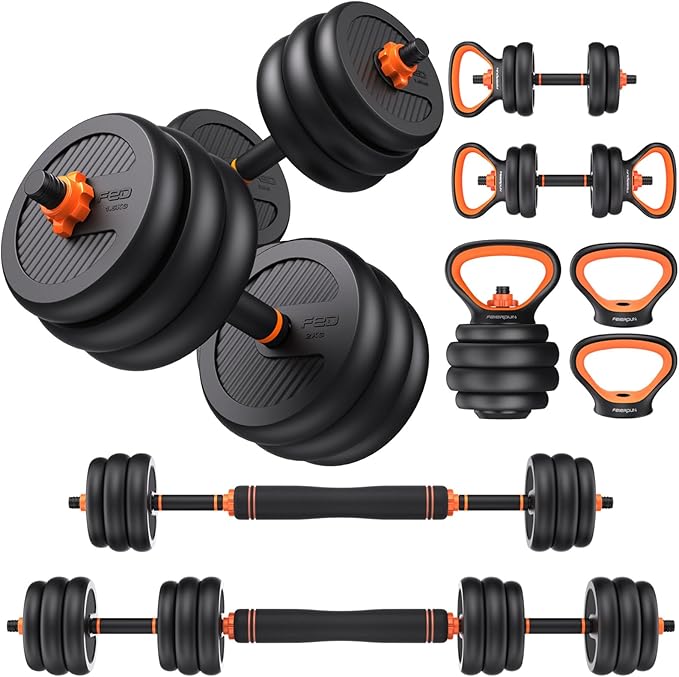
FEIERDUN DS2 Adjustable Dumbbells, 20–90 lbs
The FEIERDUN DS2 is the value pick for lifters who need a higher top-end weight without paying BowFlex pricing. The 20–90 lb range per dumbbell covers everything from single-leg RDLs at 25 lb to heavy bilateral RDLs at 90 lb, which is enough to keep most intermediate lifters progressing for a year or more. The connector accessory effectively turns the pair into a short barbell, which is a useful trick for floor presses and goblet-style hinge variants when you don't want to mess with a real bar yet. View the FEIERDUN DS2 on Amazon.
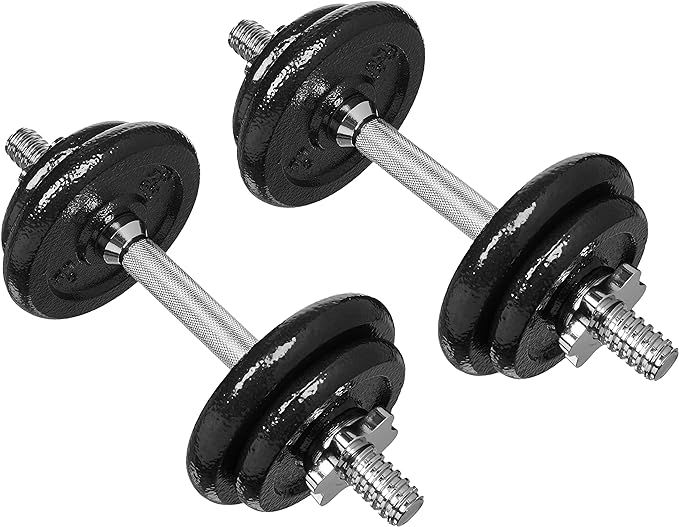
Amazon Basics Adjustable Dumbbell Set with Storage Case
This is the budget plate-and-collar style set. You're not getting dial-a-weight convenience, but you also aren't paying for the mechanism, and plate-loaded dumbbells have zero internal parts to fail. For a rehab use case where you might only need 20–40 lb for a few months, that simplicity is actually a feature. The included storage case keeps plates organized so you can change loads quickly between unilateral and bilateral sets. See the Amazon Basics set on Amazon.
Quick comparison: which adjustable dumbbell fits your rebuild?
| Pick | Top weight per hand | Adjustment style | Best for |
|---|---|---|---|
| BowFlex Results Series | ~90 lb | Dial, knurled handle | Long-term hinge loading, grip-friendly |
| FEIERDUN DS2 | 90 lb | Dial, with barbell connector | Value pick with heavy top end |
| Amazon Basics Set | ~40 lb | Plate + spinlock collar | Budget rebuild phase, simplest mechanism |
What to watch for during your first heavy session back
The lifter who re-injures a low back almost always does it on a day they felt great. Symptom-free does not mean tissue capacity is back. The cues that matter:
- Set up with the trap bar handles aligned over your mid-foot, not your toes. If you have to round your back to reach the handles, the bar is too low—use blocks or plates under the frame.
- Brace before you lift, not during. Take a 360-degree breath into your belt or your beltless waistline, lock it, then break the floor.
- Stop the set the moment bar speed slows by ~20%. Grinding reps under fatigue is where bracing breaks down and shear spikes.
- Track 24- and 48-hour soreness. Mild glute or hamstring soreness is fine. Centralized low-back stiffness past 48 hours is a signal to back the load down 10–15% next session.
If you're hinging at home and want a deeper look at form cues for the lift that bridges dumbbell and barbell work, our breakdown of Romanian deadlift form for lower-back pain walks through the bracing and tempo sequence in detail.
Frequently Asked Questions
Is the trap bar deadlift safer than the straight bar deadlift for a herniated disc?
Generally, yes. The trap bar's reduced shear force and more upright torso angle make it the preferred starting point for lifters returning from a disc herniation, once cleared by a physical therapist. The straight bar is not permanently off the table, but the trap bar is almost always the right tool for the first 3–6 months of return-to-lifting work.
Should I deadlift at all with chronic lower back pain?
For most chronic low-back pain, the answer in 2026 sports medicine is yes—loaded hip hinging is part of the solution, not the problem. The catch is starting light, progressing slowly, and choosing variations (trap bar, elevated handles, dumbbell RDLs) that don't reproduce symptoms. Total avoidance of deadlifts has been shown to delay return to full function in most non-surgical cases.
What's the difference between high-handle and low-handle trap bars for back injuries?
The high-handle position elevates the starting point by 2–4 inches, which shortens the range of motion and keeps your spine in a more neutral position at lockout. For early rehab phases, start with high handles. As you rebuild capacity, transition to low-handle pulls to recover full hip mobility.
Can I use dumbbells instead of a trap bar if I don't have one?
Yes—dumbbell Romanian deadlifts and dumbbell sumo deadlifts cover most of the trap bar's benefits at the loads you'll be using early in a rebuild phase. A pair of adjustable dumbbells topping out around 90 lb per hand will carry most intermediate lifters through the full return-to-lifting progression. See our guide to adjustable dumbbells for lifters with back issues for picks tuned to this use case.
How long after a lower back injury before I can deadlift again?
For a typical lumbar strain, light loaded hinging (kettlebell or dumbbell RDLs at ~30% of pre-injury weight) usually resumes in 2–4 weeks. Trap bar deadlifts from blocks tend to come back at 6–8 weeks, and full straight-bar work at 12–16 weeks. Disc injuries and surgical cases extend these windows. Always work with a physical therapist on the specific timeline for your injury.
Does wearing a belt make the straight bar deadlift safer for my back?
A belt increases intra-abdominal pressure, which improves spinal stability under heavy loads. It doesn't fix the underlying shear-force issue of straight bar mechanics, but it does help an experienced lifter stay braced through a heavy pull. For a lifter rebuilding from injury, focus on beltless bracing first—relying on a belt to mask weak bracing is how re-injuries happen.
Is the sumo deadlift a good middle ground between trap bar and conventional?
For some lifters, yes. Sumo's wider stance and more vertical torso reduce the moment arm at the lumbar spine compared to conventional, while still using a straight bar. It's not as forgiving as the trap bar, but it's a reasonable transition lift between the hex bar phase and full conventional deadlifts. Hip mobility is the gating factor—if you can't set up in sumo without rounding, skip it.
Bottom line
For a lifter coming back from a lower back injury, the trap bar deadlift is the safer primary lift. The biomechanics favor it—less shear, more upright torso, more forgiving bracing—and the research backs it up. Use the trap bar to rebuild capacity, use adjustable dumbbells for unilateral and accessory hinge work, and reintroduce the straight bar as an accessory once you're symptom-free and the trap bar feels easy. That's the progression that gets you back to heavy pulls without a repeat trip to the physio.
Key Takeaways
- Choosing the right trap bar vs straight bar deadlift back injury means matching capacity and output ports to your actual devices
- Always check actual watt-hours (Wh), not just watts — runtime depends on Wh, not peak output
- Also covers: trap bar deadlift bad back
- Also covers: hex bar vs barbell herniated disc
- Also covers: safer deadlift bar lower back
- Compare price-per-Wh across models to find the best value for your budget