Bare steel barbells rust because they have no protective coating—just raw, machined metal that grabs onto every water molecule in the air. In a basement holding 60–80% relative humidity, oxidation starts in days. To prevent rust bare steel barbell humid basement owners deal with, you need a four-part system: control the air, coat the steel, store it smart, and inspect it weekly. None of these steps are optional. Skip one and you'll see orange bloom on the shaft within a month. This 2026 guide breaks down exactly what works—and what wastes your money.
Why bare steel rusts so fast below grade
Iron oxidizes when it meets oxygen and water. Bare steel barbells (often marketed as "raw," "bright," or "no-coating") expose the alloy directly to the air, with nothing between the metal and the moisture. Basements compound the problem because they sit below the dewpoint of the surrounding soil for much of the year. Cool concrete walls condense moisture out of warm summer air, pushing relative humidity (RH) toward 70–85% from June through September. Chalk dust is hygroscopic—it pulls water out of the air and onto your knurling. Sweat is salty, mildly acidic, and accelerates oxidation by 10x once it dries. Add a single missed wipe-down after a workout and you have a rust farm.
The good news: rust on bare steel is preventable for the cost of a $200 dehumidifier and a $6 bottle of oil. You do not need to upgrade the bar.
The 4-step protocol every humid-basement lifter should run
This sequence is what every long-term garage-gym owner converges on. Run it as a system, not à la carte. To prevent rust bare steel barbell humid basement setups face, all four steps work together—skip any one and the other three start failing within weeks.
1. Drop basement RH below 50% year-round
This single step does more than every oil and brush combined. Buy a 50-pint capacity dehumidifier rated for the cubic footage of your gym (most unfinished basements need 50–70 pints). Plug it into a smart hygrometer with a 45% RH setpoint and route the drain into a floor sink or condensate pump so the bucket never overfills. Below 50% RH, rust formation slows dramatically; below 40%, it nearly stops. A $30 wireless hygrometer with a phone app will pay for itself the first summer.
2. Oil the shaft and sleeves on a weekly cadence
Apply a thin film of oil to the bare steel shaft, the knurling, and the sleeve assembly every week. Use 3-in-1 oil, Ballistol, or Frog Lube CLP—do not use regular WD-40 (it's a water displacer, not a lubricant, and evaporates within hours). Squeeze a dime-sized amount onto a clean shop rag, wipe the entire bar, then wipe again with a dry rag to remove excess. The film should be invisible. Pay extra attention to the knurling grooves where chalk and sweat collect and compound.
3. Store the bar off the floor and away from walls
Concrete floors radiate cold and hold condensation. Exterior basement walls do the same. Mount a vertical or horizontal gun-style rack at least 12 inches off the ground and 6 inches from any exterior wall. If you have only one bar, a $25 wall-mounted holder is enough. If you have multiple, a freestanding rack with rubber-lined cradles prevents galvanic corrosion at the contact points. Never let the bar sit in pooled chalk or on a sweat-soaked mat overnight.
4. Wipe after every session—no exceptions
Keep a microfiber towel and a nylon knurling brush hanging on the rack. After every workout, brush the knurling clean of chalk, wipe the shaft down with a dry towel, then a damp towel, then dry again. Re-oil if you sweat heavily or if the bar feels "dry." This takes 90 seconds and prevents 95% of rust events between scheduled oilings.
Best oils and coatings for bare steel in 2026
Not every lubricant works on a barbell. Here's the short list of what actually performs in humid basements, ranked by real-world feedback from budget power rack owners running unfinished basements:
- 3-in-1 Oil — cheap, available everywhere, leaves a non-sticky film. The default choice. Reapply weekly.
- Ballistol — slightly more expensive, food-safe, neutral pH. Doesn't gum up sleeve bushings. Best for combined shaft and sleeve treatment.
- Frog Lube CLP — popular with the firearms crowd; bonds to metal at room temperature. Lasts longer but costs more per ounce.
- Marine Tuf-Glide — dries to a hard film. Less re-application, but harder to remove if you want to switch products later.
- WD-40 Specialist Corrosion Inhibitor — different from regular WD-40; this is the long-term protectant version. Acceptable but greasier than 3-in-1.
Avoid: cooking oils (rancid in weeks), petroleum jelly (attracts dust and chalk), and regular blue-can WD-40 (evaporates within 48 hours and leaves nothing behind).
Climate control gear: the non-negotiables
If your basement floods or sweats every summer, oil alone won't save you. Buy this gear before you buy a single accessory:
- 50–70 pint dehumidifier with built-in pump and humidistat — $200–$280. Set to 45% RH.
- Wireless hygrometer with phone alerts — $25–$40. Get warned when RH crosses 55%.
- Vapor barrier paint on exterior walls — if your walls are damp to the touch, this is the root fix, not the symptom fix.
- Floor mats with drainage channels — keep the area under the rack dry and elevate equipment a half inch off the concrete.
When to give up on bare steel and switch to enclosed weights
For some humid-basement owners—especially in coastal regions where summer RH stays above 80% even with a dehumidifier—the maintenance overhead of a bare steel barbell becomes unrealistic. If you're spending more time oiling than lifting, it's time to consider adjustable dumbbells. They have far less exposed steel, most use enclosed coated weight plates, and many ship with storage trays that keep them off the floor by default. They're also a better fit for limited basement square footage.
The four-step protocol above is the proven way to prevent rust bare steel barbell humid basement owners can deploy without buying new equipment. But if your dehumidifier still leaves you at 60%+ RH in August, switching some volume onto enclosed-plate dumbbells lowers your maintenance load fast. See our best adjustable dumbbells of 2026 roundup for a full ranking; below are four picks that specifically hold up well in humid environments because of their coatings, enclosures, or low exposed-metal count.
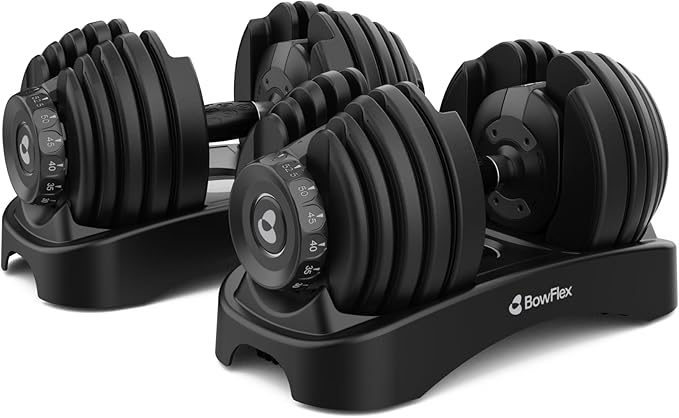
BowFlex Results Series SelectTech Adjustable Dumbbells
BowFlex's premium-tier selectorized dumbbells replace 16 pairs of fixed weights in a single footprint. The plates are fully enclosed in molded plastic shells, meaning almost no exposed steel ever touches basement air. The dial mechanism is sealed against humidity, and the included storage tray elevates the weights several inches off the floor. For humid-basement owners who want zero rust maintenance, this is the lowest-friction option on the market. Check current price on Amazon.
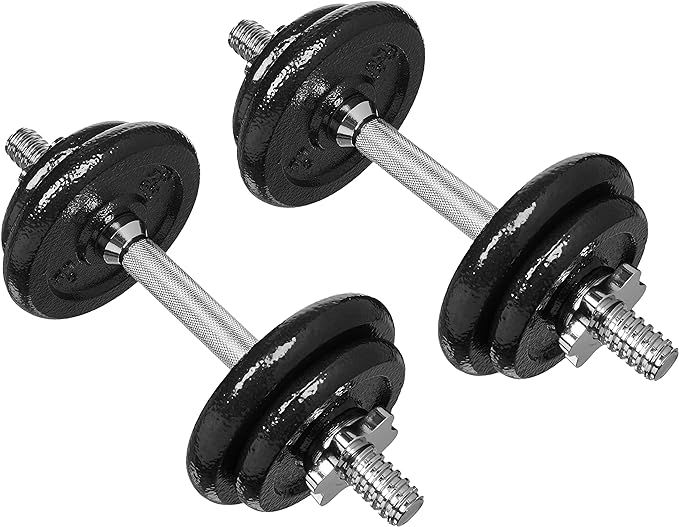
FEIERDUN DS2 Adjustable Dumbbells (20–90 lb)
The FEIERDUN DS2 set offers an unusually wide range (20–90 lbs per hand) at a mid-tier price. Plates are powder-coated cast iron with rubber-encased ends—the only bare steel is the short handle shaft and selector pin. Wipe the handle once a week and you're done. The included connector lets you pair both handles into a short barbell for floor presses and Pendlay rows, which is handy when bar maintenance is the whole reason you're shopping for alternatives. Check current price on Amazon.
Amazon Basics Adjustable Dumbbell Hand Weight Set with Storage Case
For lighter goals—mobility, hypertrophy, prehab work—the Amazon Basics adjustable hand weight set with storage case is the rust-proofest budget pick on the page. Plates are vinyl-coated, the handles are short and easy to towel-dry, and the included case seals the weights away from basement air entirely when not in use. This is what to buy if your basement has ongoing moisture issues you genuinely can't solve. Check current price on Amazon.
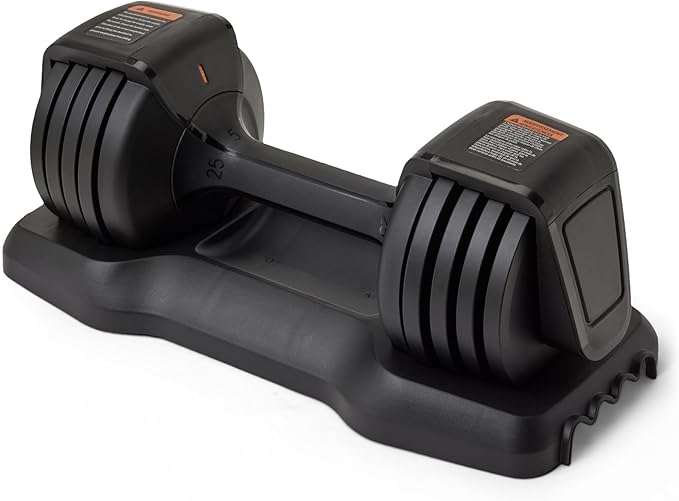
Amazon Basics Adjustable Dumbbell, 25 lb
A single 25 lb adjustable dumbbell from Amazon Basics is the cheapest "rust hedge" purchase for someone who already owns a bare steel barbell. Use the bar for compounds (squats, deadlifts, presses) and reach for the adjustable for accessory work where chalk and sweat exposure is highest. Keeping accessory volume off the bare bar cuts your weekly wipe-down workload roughly in half. Check current price on Amazon.
Quick comparison: humidity-friendly adjustable dumbbell picks
| Model | Weight Range | Plate Coating | Includes Storage | Best For |
|---|---|---|---|---|
| BowFlex SelectTech Results | 5–52.5+ lb | Fully enclosed plastic | Yes, elevated tray | Zero-maintenance lifters |
| FEIERDUN DS2 | 20–90 lb | Powder coat + rubber | Optional stand | Heavy lifters wanting a barbell alternative |
| Amazon Basics Hand Weight Set | Up to 40 lb pair | Vinyl-coated | Sealed case | Worst-case humidity |
| Amazon Basics 25 lb Adjustable | Up to 25 lb | Enclosed cast iron | Compact tray | Accessory work alongside a bare bar |
If you already own a bare bar and just want to reduce its maintenance load, the 25 lb Amazon Basics adjustable is the cheapest hedge. If you're starting fresh and the basement floods every spring, the BowFlex SelectTech or the sealed Amazon Basics case set is the right answer. Pair any of these with the right flat bench under $200 and the budget power rack pick and you have a complete humid-basement gym that won't need to be replaced in five years.
Frequently Asked Questions
How often should I oil a bare steel barbell stored in a 70% humidity basement?
Weekly minimum. If your hygrometer reads above 65% RH consistently, move to every 3–4 days. Apply a dime-sized amount of 3-in-1 oil to a shop rag, wipe the entire shaft and sleeves, then wipe dry. The goal is a microscopic film, not a wet coating. If you see fresh orange specks before your next scheduled oiling, you're behind—increase frequency and re-evaluate your dehumidifier setpoint that same day.
Can I use WD-40 to prevent rust on my bare steel barbell?
Regular blue-can WD-40 is a water displacer that evaporates within 24–48 hours, so it offers almost no long-term rust protection. The WD-40 Specialist Long-Term Corrosion Inhibitor product (different formulation, separate can) does work and lasts about 30 days per application. For everyday humid-basement use, 3-in-1 oil or Ballistol is cheaper, easier to find, and more effective per dollar.
What's the best dehumidifier setting for a basement home gym?
Target 40–45% relative humidity. Below 40% gets uncomfortable (dry throat, static shocks), and above 50% accelerates corrosion on any exposed steel. Most modern dehumidifiers let you set a target RH—dial it to 45% and forget about it. Empty the bucket weekly, or better, plumb the drain into a floor sink or condensate pump so the unit runs continuously without intervention.
Will surface rust on a bare steel barbell ruin it?
No. Surface rust (light orange bloom) on the shaft or knurling is cosmetic and removable. Hit it with a bronze or brass-bristled brush, then oil the area thoroughly. Repeat weekly until it's gone. Only deep pitting—visible craters in the steel—is permanent damage, and that takes months of neglect to develop. Catching rust within a week of formation always leaves the bar functionally identical to new.
Is a Cerakote barbell worth the upgrade for a humid basement?
If you've tried the 4-step protocol and still see rust, yes. Cerakote is a ceramic-polymer coating sprayed onto the shaft and oven-cured; it's far more rust-resistant than bare steel and far cheaper than stainless. A Cerakote shaft typically adds $80–$120 over the bare equivalent and reduces oiling cadence to monthly. Hard chrome and black zinc are cheaper but offer less corrosion resistance than Cerakote in the 2026 barbell market.
Does chalk on the knurling make rust worse?
Yes, significantly. Chalk (magnesium carbonate) is hygroscopic—it pulls moisture out of the air and concentrates it against the steel. A chalked bar left overnight in 65% RH air will rust in the knurling grooves within a week. Always brush chalk off the knurling with a nylon brush after every session before storing the bar. If you train with chalk daily, brush twice: once mid-session, once at the end.
Can I prevent rust bare steel barbell humid basement gyms develop without buying a dehumidifier?
You can slow it, not stop it. If you can't run a dehumidifier, store the bar inside a sealed gun-style case with desiccant packs, oil it twice a week instead of once, and keep it as far from exterior walls as physically possible. But every long-term humid-basement gym owner eventually buys a dehumidifier—the math always favors it over replacing rusted-out equipment every 3–5 years.
Key Takeaways
- Choosing the right prevent rust bare steel barbell humid basement means matching capacity and output ports to your actual devices
- Always check actual watt-hours (Wh), not just watts — runtime depends on Wh, not peak output
- Also covers: bare steel barbell rust prevention
- Also covers: humid basement barbell care
- Also covers: stop barbell rusting basement gym
- Compare price-per-Wh across models to find the best value for your budget