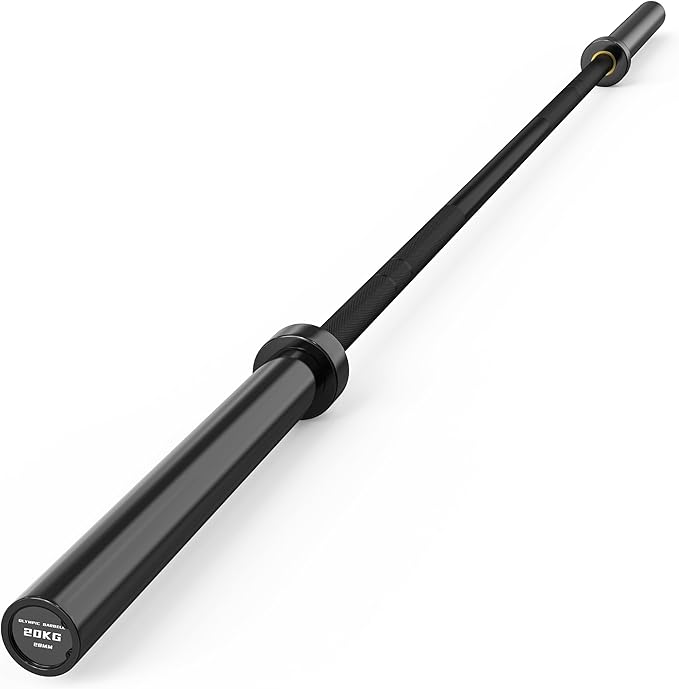
If you have small hands, the right barbell knurling for women small hands is a moderate (medium-depth) volcano or hill pattern on a 25mm women's bar—not the aggressive mountain knurl marketed to competitive powerlifters. A 25mm shaft lets your fingers actually wrap and close into a hook, which means you can tolerate (and benefit from) a slightly grippier knurl without tearing skin. Aggressive knurl on a 28-29mm men's bar is the worst combo for small hands: the larger diameter forces an open grip, and the sharp teeth bite into the soft tissue of palms that can't fully close around the shaft. Match knurl to bar diameter first, lift type second.
The Four Knurl Aggressiveness Tiers in 2026
Manufacturers don't standardize knurl naming, but the home-gym community has settled on a four-tier vocabulary you'll see across reviews, spec sheets, and forum posts:
The best barbell knurling for women small hands for your situation depends on how you plan to use it and where.
- Passive (very mild): Shallow diamonds, almost smooth to the touch. You can drag a fingernail across without it catching. Found on most beginner bars, hex bars, and curl bars. Slips badly above ~135 lb deadlift for anyone with sweaty palms.
- Moderate (medium / hill): Clearly tactile, leaves a faint impression on your palm after a heavy set but doesn't draw blood. The volcano pattern (hollow-tipped diamond) is the gold standard here. This is the right starting point for almost every woman with small hands.
- Aggressive (mountain): Sharp, pointed pyramids that bite immediately. Designed for one-rep-max powerlifting where any slip ends the attempt. Will tear skin during high-volume work.
- Coarse / cheese-grater: Competition-grade IPF deadlift bars. Reserved for meet day. Do not buy one as your only bar.
Most reputable home-gym barbells now publish a knurl depth in millimeters (0.4-0.6mm is moderate, 0.7-0.9mm is aggressive, 1.0mm+ is competition). If a product listing doesn't disclose this number in 2026, that's a yellow flag—better brands have standardized on publishing it.
Why Small Hands Change the Calculus
Knurling is friction between your skin and metal. Friction force scales with two things: the coefficient of friction (set by the knurl pattern and your chalk) and the normal force (how hard your fingers can press into the bar). Small hands cap your normal force in three ways:
- Reduced wrap angle. A hand that can only get fingers to two o'clock on a 28mm bar generates far less squeeze pressure than the same hand on a 25mm bar where the thumb can fully oppose the index.
- Smaller palm surface contact. Less skin contacts the knurl, so each diamond bears more load. Aggressive knurl + small contact area = torn calluses.
- Weaker thumb opposition in hook grip. Hook grip relies on the thumb being long enough to wrap around the bar and lock under at least two fingers. On a 28mm bar this is brutal for small hands; on a 25mm bar it becomes viable.
This is why a moderate knurl on the correct diameter outperforms an aggressive knurl on the wrong diameter every time. If you can't close your grip, more teeth just means more pain without more friction.
Bar Diameter Matters More Than Knurl Alone
Before you obsess over knurl pattern, fix the shaft diameter. There are three standard sizes you'll encounter in 2026:
| Bar Type | Shaft Diameter | Bar Weight | Best For Small Hands? |
|---|---|---|---|
| Women's Olympic Bar | 25mm | 15kg / 33 lb | Yes — primary recommendation |
| Men's Olympic Bar | 28mm | 20kg / 44 lb | Acceptable with moderate knurl + chalk |
| Men's Powerlifting Bar | 29mm | 20kg / 44 lb | No — too stiff and too wide |
| Deadlift Bar (specialty) | 27mm | 20kg / 44 lb | Yes for deadlifts only — thin and whippy |
| Squat Bar (specialty) | 32mm | 25kg / 55 lb | No — almost no one with small hands needs this |
If you're building a home gym from scratch and you have hands under about 7 inches (measured tip of middle finger to base of palm), default to a 25mm women's bar as your main bar. The 5kg weight reduction is a bonus, not the point—the point is grip mechanics. See our breakdown of women's 25mm vs men's 28mm barbells for the full diameter comparison.
Match Knurl to Lift Type
Deadlift
Deadlifts demand the most grip. A moderate-aggressive volcano knurl on a 27mm deadlift bar is ideal. If you're doing all your lifts on one bar, moderate volcano on a 25mm women's bar handles deadlifts up to around 1.5× bodyweight without slipping, assuming chalk. Above that, the knurl matters less than your hook grip technique and grip-strength work.
Squat
The squat doesn't need aggressive shaft knurl—the bar sits on your traps, not your palms. What matters is whether the bar has a center knurl (see below). Moderate knurl on the shaft is plenty for hand placement.
Bench Press
Aggressive bench knurl is a red flag for women with small hands. Your wrists are already vulnerable to extension under load, and sharp knurl encourages a death grip that adds stress. Moderate is fine, and the closer-set knurl marks on a women's bar (16-inch IWF spacing) help you find a symmetrical grip without measuring.
Olympic Lifts (Snatch, Clean & Jerk)
For snatches and clean catches, you do not want aggressive knurl—the bar has to rotate cleanly through your fingers in the turnover. A passive-to-moderate knurl is the standard for Olympic-spec bars. The needle bearings in the sleeves matter more than knurl depth here.
Center Knurl: Skip It or Take It?
The center knurl is the 4-6 inch band of texturing in the middle of the bar. Powerlifters love it because it grips the back of your shirt during heavy squats and prevents the bar from sliding down. For women with small hands, the calculus is different:
- Take a center knurl if you squat above bodyweight and the bar slides on your back during heavy sets. The friction is worth occasional scrapes.
- Skip the center knurl if you clean the bar to your front rack frequently. The center knurl bangs against your collarbones during clean catches and is genuinely painful on smaller frames. Most women's 25mm bars omit it for exactly this reason.
A passive center knurl (sometimes called a "polished center band") is a fair compromise on a multi-purpose bar.
How to Test Knurl Aggressiveness Before You Buy
You usually can't touch a bar before buying online. Use these proxies in 2026:
- Knurl depth spec. Look for a published number in mm. 0.4-0.6mm is the sweet spot for small hands.
- Pattern name. "Volcano," "hill," or "medium diamond" = moderate. "Mountain," "pyramid," "competition," or "IPF-spec" = aggressive.
- Video review. A 30-second clip of a fingernail dragged across the knurl tells you everything. If you hear a sharp scraping click, it's aggressive. A muted scratch is moderate.
- Buyer photos of forearms after deadlift sessions. Search reviews. Light pink marks fading in an hour = moderate. Red welts or broken skin = too aggressive for your hands.
Chalk, Tape, and Callus Care
The right knurl is half the equation; the other half is hand prep. Chalk dramatically increases grip on a moderate knurl, often more than upgrading to an aggressive knurl would. Liquid chalk is the cleanest option for home gyms in 2026—no dust on the floor or in the rack. Compare options in our chalk vs liquid chalk guide for deadlifts.
If you're tearing calluses, the fix is usually file-and-moisturize, not switching bars. Use a pumice stone weekly to keep calluses flat. Raised calluses are the actual thing that tears—not the knurl itself. A moderate knurl on a flat-callus hand will be more comfortable than a passive knurl on a thick-callus hand.
Building the Rest of the Home Gym Around the Bar
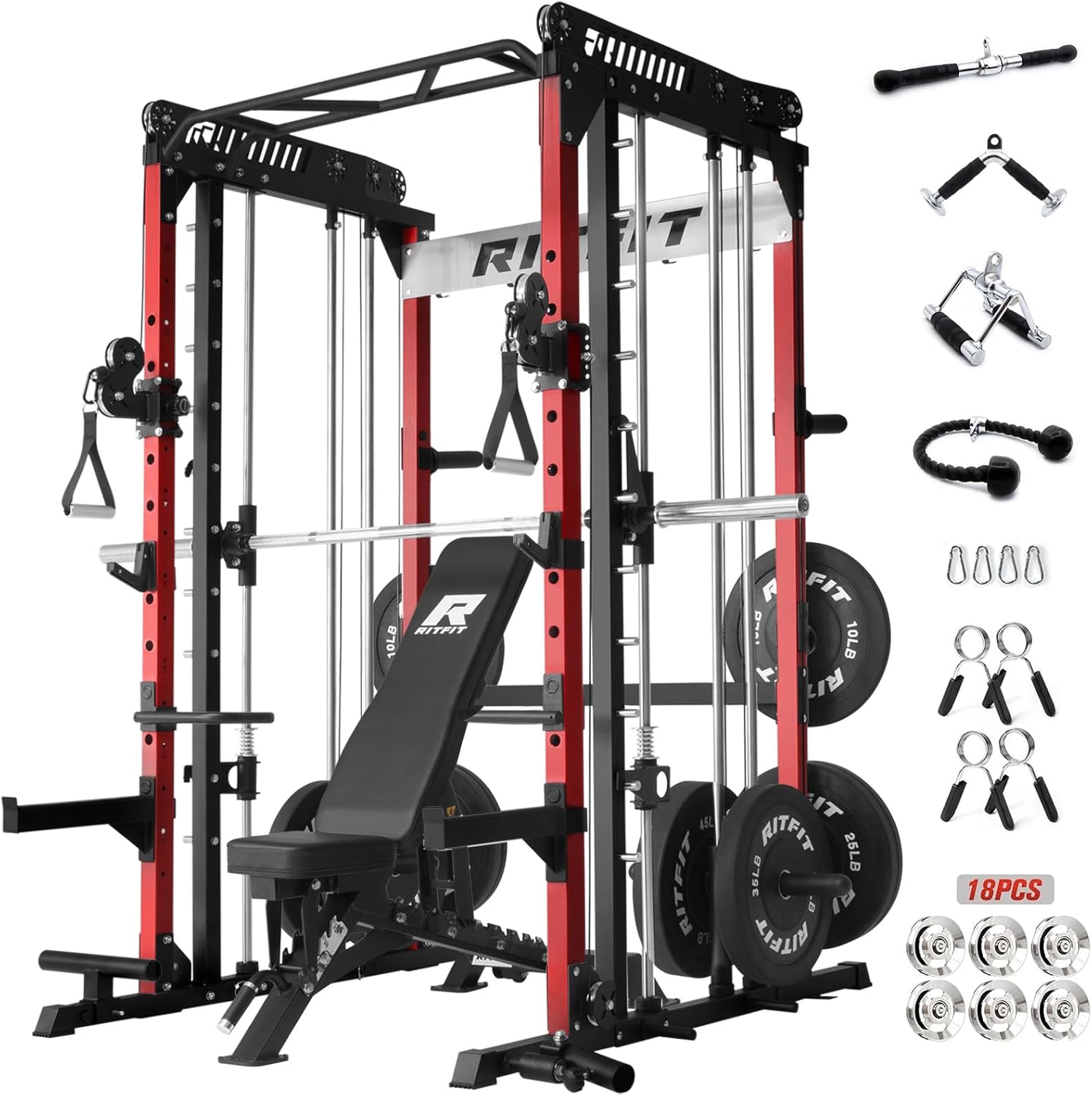
Once your bar choice is locked, the next decisions are plates and a rack. For plates, bumper plates protect your floor during dropped deadlifts and Olympic lifts—non-negotiable if you have downstairs neighbors. See our bumper plate recommendations for 2026 picks. For the rack, a full power rack with safeties beats a squat stand if you train alone, because aggressive knurl won't save you from a missed bench rep without spotter arms—see power rack vs squat stand for the full breakdown.
Quick Recommendations by Use Case
If you mostly do general strength training (5x5, Starting Strength, push/pull/legs)
A 25mm women's bar with moderate volcano knurl, no center knurl, dual IWF/IPF knurl marks. Look for a bar rated to at least 1000 lb tensile strength with bronze or composite bushings (needle bearings are overkill for non-Olympic work).
If you focus on Olympic lifting
A 25mm women's training bar with passive-to-moderate knurl, no center knurl, needle bearings in the sleeves for fast spin. Knurl marks at IWF spacing (910mm). Whip is a feature here, not a bug.
If you focus on powerlifting
A 25mm women's power bar with moderate-aggressive volcano knurl, optional passive center knurl, knurl marks at IPF spacing (810mm). Higher tensile strength rating (190k+ PSI) for stiffness under heavy squats.
If you're not sure yet
Start with the general strength training recommendation. It's the most versatile and the moderate volcano knurl is forgiving across all lifts. You can always add a specialty bar later once you know which direction your training is heading.
What About Adjustable Dumbbells for Grip Comfort?
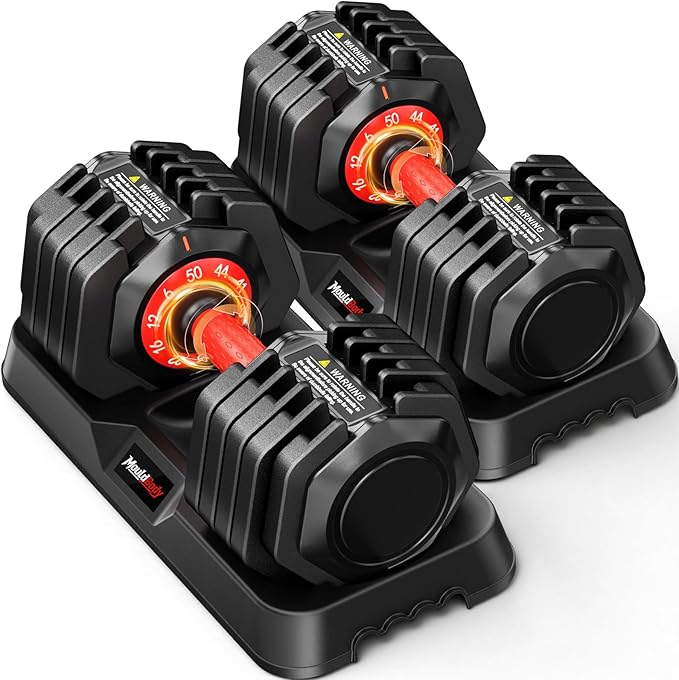
If you're not ready to commit to a barbell setup, adjustable dumbbells are a legitimate alternative that sidesteps the knurl question entirely—dumbbell handles use textured rubber or smooth steel and are sized for closed grips. They won't replace a barbell for heavy compound lifts, but for the first six months of training they cover most of the same movement patterns at a fraction of the floor space.
Frequently Asked Questions
What knurl depth is best for women with small hands?
0.4-0.6mm knurl depth in a volcano or hill pattern is the sweet spot. This is deep enough to grip securely with chalk during heavy deadlifts but shallow enough to avoid shredding skin during higher-rep work. Anything above 0.8mm starts becoming uncomfortable for hands that can't fully close around the shaft.
Should I get a 25mm or 28mm barbell if I have small hands?
25mm almost always. The 3mm reduction sounds trivial but transforms grip mechanics—your thumb can fully oppose your fingers, hook grip becomes viable, and you need significantly less squeeze force to hold the bar. The only reason to choose 28mm is if you specifically train at a commercial gym that uses 28mm bars and want consistency.
Will aggressive knurl actually improve my deadlift if I have small hands?
No, usually the opposite. Aggressive knurl tears skin before it improves grip force, because your closed-grip wrap angle on a too-wide shaft can't generate enough normal force to use the extra friction. Moderate knurl + chalk + hook grip on a 25mm bar will outlift aggressive knurl + chalk on a 28mm bar every time for small-handed lifters.
Do I need a center knurl on my barbell?
Only if your bar slides down your back during heavy squats. If you front squat, clean, or are still building up to bodyweight squats, skip the center knurl—it bruises collarbones during clean catches and serves no purpose at lighter squat loads. Most women's bars omit it by default for this reason.
How do I stop my hands from hurting when I switch to a more aggressive barbell knurl?
First, file your calluses flat with a pumice stone—raised calluses are what tear, not the knurl. Second, use chalk to spread grip force evenly across more skin. Third, lower the volume during the transition; do your working sets but cut accessory pulling volume by half for two weeks while skin adapts. If pain persists after a month, the knurl is genuinely too aggressive for your hands and you should swap bars.
Is a hex bar better than a straight barbell for small hands?
For deadlifts specifically, yes for many small-handed lifters. The neutral grip is mechanically stronger and the handles are typically 30mm but with passive knurl and a closed-grip wrap on shorter handles. However, a hex bar can't replace a straight bar for squats, presses, or rows, so it's a complement rather than a substitute.
Can I sand down an aggressive knurl on a barbell I already own?
Yes, but carefully. Use 220-grit sandpaper wrapped around a hardwood block and work the knurl lightly with long passes along the bar's length, not across. Stop frequently to test—you can always remove more, you can't add it back. Two minutes per knurl band typically takes an aggressive mountain pattern down to a moderate hill pattern. Wipe with mineral oil afterward to prevent rust.
Key Takeaways
- Choosing the right barbell knurling for women small hands means matching capacity and output ports to your actual devices
- Always check actual watt-hours (Wh), not just watts — runtime depends on Wh, not peak output
- Also covers: best knurling for small hands
- Also covers: womens barbell knurling guide
- Also covers: aggressive vs passive knurl women
- Compare price-per-Wh across models to find the best value for your budget