The Titan X-3 monolift conversion upgrades that actually work in 2026 are a focused stack of four parts: dedicated swing-away monolift arms, heavy-duty sandwich J-cups for the lift-off, strap or pin-pipe safeties tuned for missed reps in the hole, and either a deadlift platform or rear ballast to keep the rack planted when you re-rack hard. You do not need to replace the cage. The X-3's 3" x 3" 11-gauge tubing accepts the same family of attachments that bolt onto Rogue Monsters and similar 3x3 racks, which is exactly why the conversion is worth doing instead of buying a standalone monolift.
What "monolift conversion" actually means on a Titan X-3
Top Picks
A true commercial monolift is a separate piece of equipment with cradle arms that pivot out of the way after you stand the bar up, so you never walk the bar back. You step under, stand, the arms swing forward, and you squat in place. Converting a Titan X-3 power rack to behave like a monolift is not about replacing the cage. It is about adding swing-away or pivoting cradle arms that perform the same function, then upgrading the cups, safeties, and base so heavy lifts stay safe once walkout is out of the picture.
The X-3 is a strong candidate for this build because its uprights are 3" x 3" 11-gauge steel with hole spacing compatible with most aftermarket monolift arms on the market. Titan, Rep Fitness, Bells of Steel, and a handful of small fabricators all sell arms that index directly into the X-3 hole pattern. The result, when assembled correctly, gives you about 90% of the function of a $2,000 commercial monolift for roughly half the price.
The five Titan X-3 monolift conversion upgrades that matter
1. Swing-away monolift arms (the core attachment)
This is the single upgrade that earns the "monolift" label. Look for arms that mount to the front uprights via a captured pin or bolt-through bracket, with a hinge that lets the cradle rotate away from the bar after lift-off. Titan's own mono arm attachment works, as do Rep's MonoLifts and Bells of Steel's MonoLift Attachment. Confirm two things before buying: the bracket fits 3" x 3" tubing with the correct hole size for your generation of X-3, and the arm length puts the cradle in a comfortable lift-off position for your height. Most lifters between 5'7" and 6'2" sit in the middle of the adjustment range.
2. Sandwich J-cups for the lift-off position
Even with mono arms installed, you still need a clean lift-off cup. Stock X-3 J-cups are fine for everyday work, but heavy squatters benefit from sandwich-style cups where the barbell knurl is held between two UHMW liners instead of resting on a single plastic insert. Sandwich cups cradle the bar more positively, reduce knurl-on-upright wear, and make re-racking dramatically quieter. Pair them with your mono arms so the bar transfers from the static cups to the swing cradles without rolling. Our guide to the best 2026 power rack attachments lists the cups that fit the X-3 1" hole pattern.
3. Strap safeties or flip-down spotter arms
Walking the bar out is the most common place where solo lifters drop heavy squats. Once you remove the walkout with a monolift conversion, the failure mode shifts. Now the risk is missing the rep in the hole. Strap safeties (HD nylon webbing slung between steel cross frames) are the gold standard because they dissipate energy progressively on a missed rep instead of stopping the bar dead. Steel pin-pipe safeties also work and are cheaper, but they transfer more shock into your shoulders and the rack. If you have a small garage footprint, flip-down spotter arms are an option, but they reduce usable lift width and only catch the bar at one fixed height.
4. Plate storage and rear ballast
Monolift squats are typically performed at heavier weights than walked-out squats because there is no neuromuscular cost to the lift-off. That means more plates on the bar and more leverage tipping the rack forward when you re-rack a hard set. Vertical plate posts on the rear uprights pull the center of mass back behind the front legs. If your X-3 is not bolted to a floor or platform, load 200+ lb of bumpers onto rear posts before pushing past 90% of your max.
5. Deadlift / squat platform or rubber base
A 6' x 8' platform of two 3/4" plywood sheets sandwiched with stall mats does three jobs: protects the floor, gives the rack a level reference, and dampens the sound when a strap safety catches a missed squat. Some lifters skip this step and regret it after the first failed rep at 90%. Strap safeties dissipate energy beautifully, but the bar still finds the floor eventually, and a concrete slab does not forgive plates.
Quick comparison of monolift conversion paths
| Conversion path | Approx. cost (2026) | Best for | Trade-off |
|---|---|---|---|
| Full swing-away mono arms + sandwich cups + strap safeties | $700-$950 | Solo lifters squatting 1.5x BW or more | Adds 6-8" to front rack footprint |
| Sandwich cups + strap safeties only (no arms) | $300-$450 | Lifters who prefer walkout but want safer misses | Not a true monolift; still need to walk the bar |
| Replace X-3 with standalone monolift | $1,800-$2,400 | Garage powerlifting specialists | Loses general-purpose rack functionality |
Order of operations: what to buy first
If your budget is staged across paychecks, this is the priority order I recommend. Buy the swing-away monolift arms first — without these, the rest of the stack is just a strong squat rack with no walkout savings. Buy strap safeties second, before adding meaningful load. A missed rep in a converted rack with no safeties is the worst possible failure mode. Sandwich J-cups are third, mostly for quality of life and longevity of the uprights. Plate storage and rear ballast only matter once you are working at 500+ lb on the bar. A dedicated platform is last, because thick stall mats under the rack work in the interim.
Compatibility notes specific to the Titan X-3 line
Titan revised the X-3 line several times between 2018 and 2024, and the differences matter when you are sourcing aftermarket attachments. The current generation uses 1" hole spacing through the bench and lift-off zone, with 2" spacing through the bottom. Early X-3 units shipped with uniform 5/8" hardware. Most third-party mono arms ship for 1" holes today, so verify your hardware before ordering. Both the 91" "tall" and 82" "flat foot" variants accept the same attachments, but flat-foot units need bolt-down anchoring or rear ballast for heavy mono work because their footprint is shallower. Some mono arm designs need clearance behind the front uprights for the hinge mechanism, so confirm with the manufacturer if you also run plate storage on the same upright.
Complementary accessory training tools
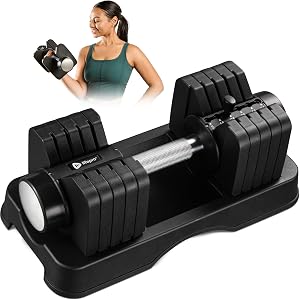
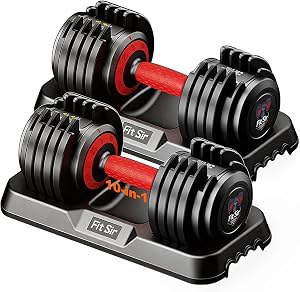
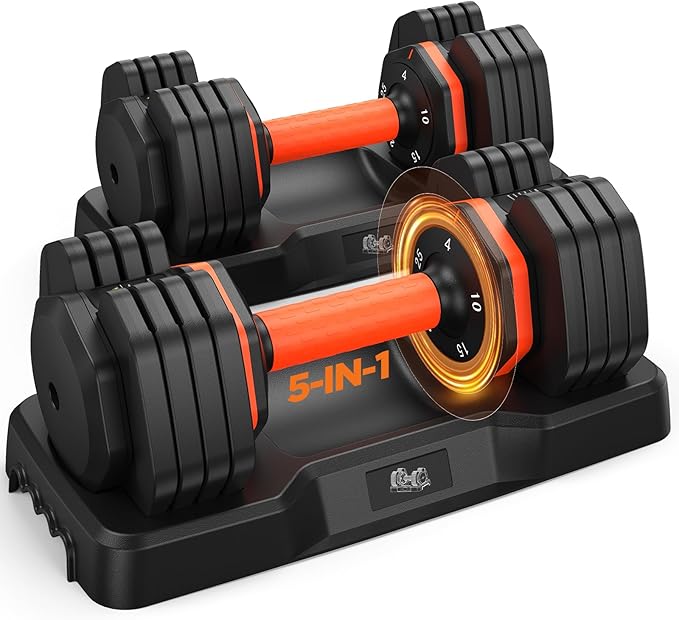
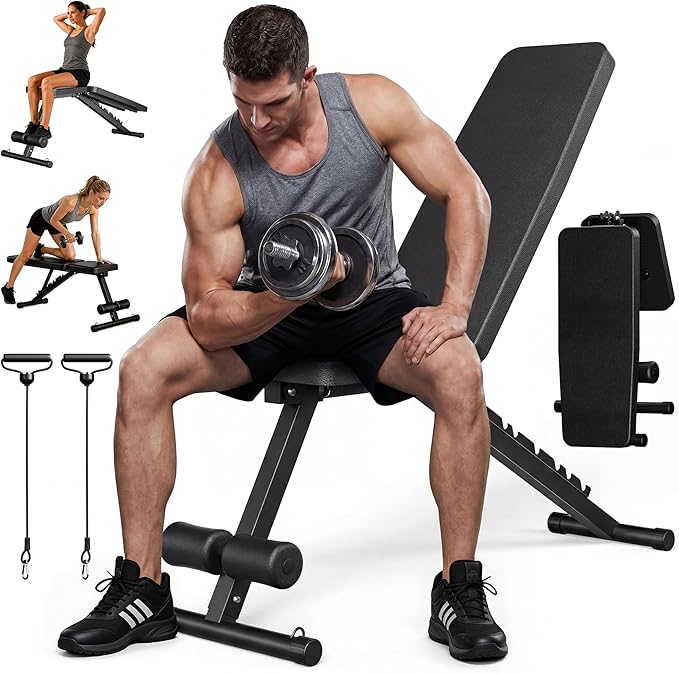
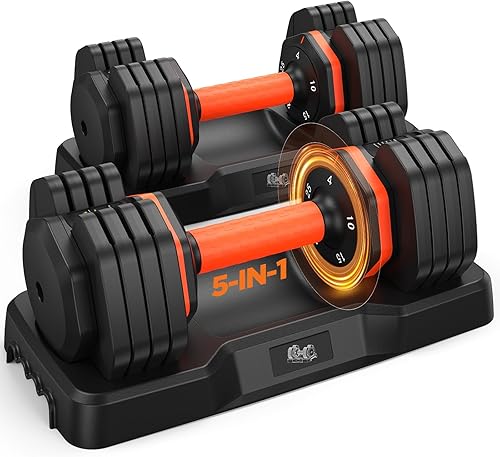
A monolift-converted X-3 is a heavy-squat specialist. The rest of your training week benefits from accessories that build the supporting musculature — adductors, hamstrings, glute medius, and unilateral quad strength — that drive your squat ceiling higher. Adjustable dumbbells are the most space-efficient way to train those patterns at home without dedicating rack real estate to a full fixed dumbbell wall. Pair these with the assistance work in our home gym squat safety guide.
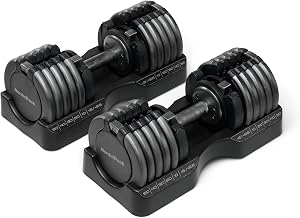
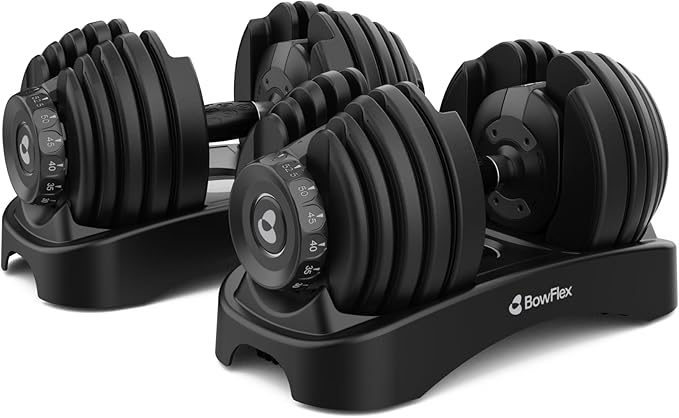
BowFlex Results Series SelectTech Adjustable Dumbbells
The BowFlex SelectTechs cover a 5-50 lb range per hand with a quick dial selector. For Bulgarian split squats, RDLs, walking lunges, and goblet squats — the accessories that most directly support heavy squat training — that range covers nearly every home lifter for years. Build quality on the Results Series is meaningfully better than the previous SelectTech generation, the cradle keeps the pair compact next to a converted rack, and the dial action holds up better under fast tempo work. Check current price on Amazon.
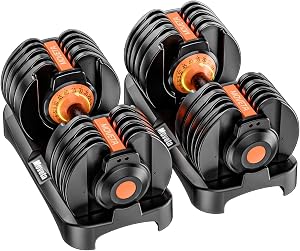
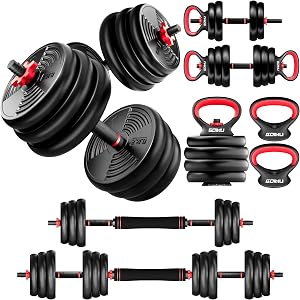
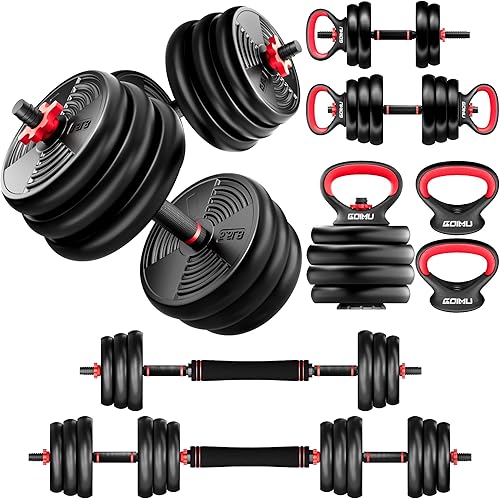
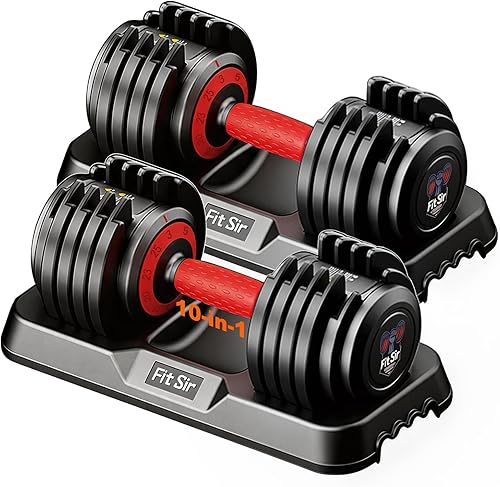
FDB2 Adjustable Dumbbell Set of 2, 110lbs with Stand
If you are squatting in a converted X-3, you are probably strong enough that 50 lb dumbbells will be light within a year of consistent training. The FDB2 set ramps to 110 lb per hand and ships with its own storage stand, which solves the storage problem in a garage where rack space is already committed to monolift arms and plate posts. The plate-loaded design is slower to change weight than a dial selector but takes considerably more abuse and survives drops that would kill a SelectTech. See it on Amazon.
Frequently Asked Questions
Will any 3x3 monolift arm fit a Titan X-3?
Most current-generation 3x3 monolift arms fit, but verify hole size and pattern. A current X-3 with 1" hole spacing accepts the majority of aftermarket arms from Rep, Bells of Steel, and Titan. A 2019-era X-3 with 5/8" hardware needs either an adapter sleeve or arms sold specifically for that older pattern, which are getting harder to find new in 2026.
Do I need to bolt the rack down for monolift squats?
Strongly recommended once you cross 1.5x bodyweight on the bar. The forward force of a hard re-rack onto swing arms is what tips converted racks. If your slab will not accept anchors, load 200+ lb of bumper plates on rear vertical storage posts to shift the center of mass behind the front uprights. Our 2026 barbell roundup pairs well with this kind of build.
Is a monolift conversion safer than walking the bar out?
For solo lifters, generally yes. You eliminate the most common drop scenario, which is losing balance during walkout. But the conversion changes the safety profile rather than removing risk entirely. Strap safeties become more important after conversion, not less, because the remaining failure mode is missing in the hole.
Can I use stock Titan J-cups with aftermarket monolift arms?
Yes. The cups and mono arms operate at different upright positions and do not conflict mechanically. Many lifters keep stock cups on the lower set of holes for benching and bar storage, then run mono arms in the lift-off position for squat day. The only watch-out is making sure neither attachment fouls the other when removing the bar.
How much does a full Titan X-3 monolift conversion cost in 2026?
Budget roughly $300-$500 for swing-away arms, $200-$300 for strap safeties, $100-$150 for sandwich cups, and $200-$300 for a basic plywood-and-stall-mat platform. A complete conversion lands around $800-$1,250, which is meaningfully less than a standalone monolift starting around $1,800 and well under commercial models that clear $3,000.
Will a monolift conversion void my Titan X-3 warranty?
Titan's warranty covers manufacturing defects, not user modifications. Bolted-on attachments that use the existing hole pattern do not typically affect coverage. Drilled holes, welded modifications, or any cutting of the uprights will void it. Check with Titan support directly before any irreversible change, especially if your rack is still inside the original warranty window.
What barbell pairs best with a converted X-3 for heavy monolift squats?
A 29mm power bar with aggressive knurl and stiff whip. Rogue's Ohio Power Bar, Titan's TITAN Series Power Bar, and Bells of Steel's Mighty Power Bar all work well in a converted X-3. Avoid 28mm dual-marked bars for heavy mono work — the extra whip becomes a stability problem at lift-off when the arms swing forward and the cradles release the sleeves at slightly different rates.
Key Takeaways
- Choosing the right Titan X-3 monolift conversion upgrades means matching capacity and output ports to your actual devices
- Always check actual watt-hours (Wh), not just watts — runtime depends on Wh, not peak output
- Also covers: Titan X-3 monolift attachment
- Also covers: convert X-3 rack to monolift
- Also covers: Titan rack monolift accessory
- Compare price-per-Wh across models to find the best value for your budget