For glute-focused lifters who want one bench that handles barbell hip thrusts, banded glute bridges, B-stance work, and incline accessory pulls, an adjustable decline bench glute bridge hip thrust setup is the most space-efficient piece of home gym equipment you can buy in 2026. The decline angle (usually -10° to -20°) lets you wedge your shoulders against the pad and drive your hips through a full range of motion without the bench sliding, while the incline range still gives you Bulgarian split-squat, chest-supported row, and shoulder press positions. Below we cover the bench specs that actually survive heavy hip-thrust work, plus the loading dumbbells that pair with them for B-stance, single-leg, and constant-tension glute training.
What separates a hip-thrust-ready bench from a generic FID bench
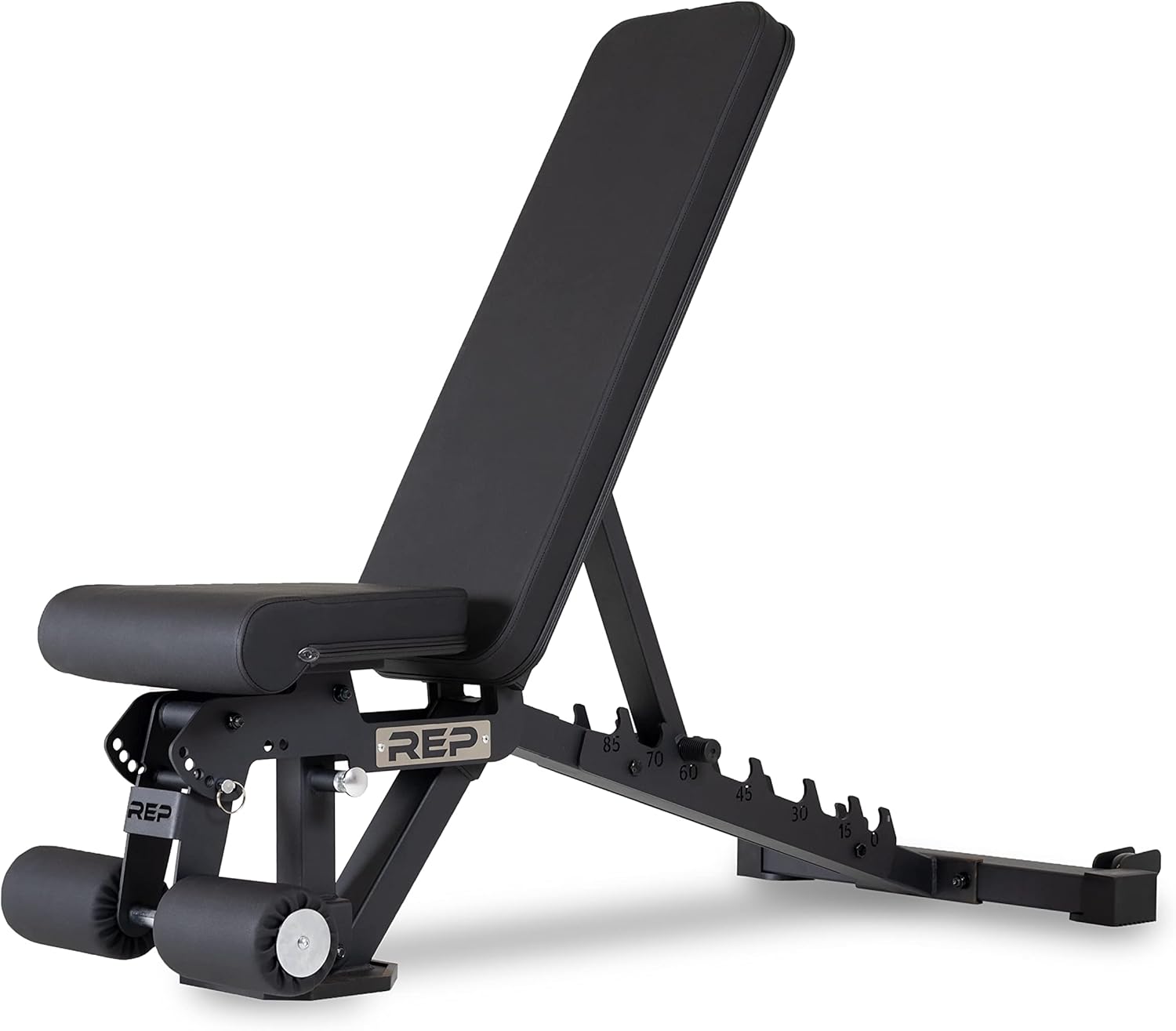
Most "FID" (flat / incline / decline) benches sold under $250 are built around chest-press use. They have a steep decline angle (-20° to -30°) for sit-ups, narrow pads under 10 inches wide, and floor-mounted rear feet that lift off the ground the moment you push your hips through a thrust. A bench engineered for the adjustable decline bench glute bridge hip thrust pattern looks different.
- Pad width 11.5–12 inches. Narrow pads cut into your shoulder blades when 225 lb is bridged across your hips. Wider pads spread the load.
- Pad length 47–52 inches. You need enough surface for your scapulae to land cleanly without your head dangling off the back.
- Frame footprint with a triangulated rear leg. A bench that pivots on a single rear point will tip backward when you drive up. Look for a wide, ladder-style rear leg or a horseshoe base.
- Decline pin at -10° or -15°, not -30°. Anything steeper turns the movement into a sit-up. -10° is what most glute-focused lifters actually use to clear their hips at lockout.
- 1000 lb+ weight capacity. Combined bodyweight plus a 405 lb barbell on top is closer to the bench's real-world load than the marketing capacity suggests.
- Ladder-style backrest with 7+ angles. You want flat, -10°, plus 15°, 30°, 45°, 60°, 75°, and 90° for the incline accessory work you'll superset with thrusts.
- A1 Barbell hip thrust — 4 sets of 6–8 at RPE 8
- B1 Single-leg dumbbell hip thrust — 3 sets of 10 per side
- B2 Bulgarian split squat (rear foot on bench, backrest flat) — 3 sets of 8 per side
- C1 Banded constant-tension bridge with dumbbell — 3 sets of 25 with a 2-second pause at top
- C2 Chest-supported row on bench at 30° incline — 3 sets of 12
How dumbbell loading fits into a hip-thrust program
Even if your main hip-thrust driver is a barbell, adjustable dumbbells make your bench five times more useful. You'll use them for single-leg hip thrusts (the bench's decline setting really shines here because you can't load a barbell across one hip cleanly), B-stance hip thrusts, frog pumps, banded constant-tension bridges with a dumbbell pinned at the hip crease, and the entire accessory block (Bulgarian split squats, RDLs, step-ups, glute-focused rows) that completes a posterior chain session. The right adjustable dumbbells let you change resistance in 2.5–5 lb increments between sets without breaking tempo.
Adjustable dumbbells that pair with a decline bench setup
| Dumbbell | Max weight per hand | Increment | Best hip-thrust use case |
|---|---|---|---|
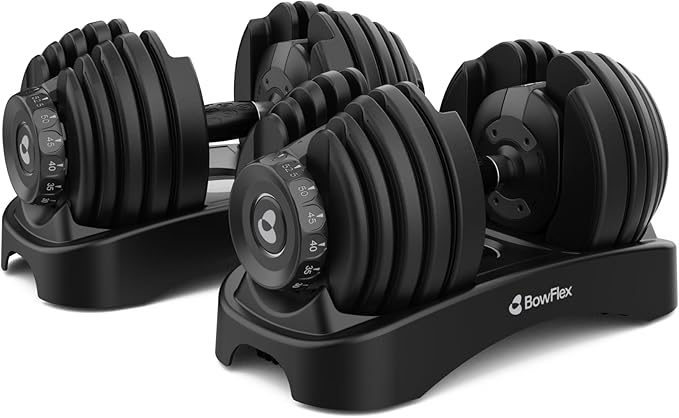
| BowFlex Results SelectTech | ~90 lb | 5 lb | Heavy unilateral thrusts + supersets |
| FEIERDUN DS2 20–90 lb | 90 lb | 5 lb | Connector builds a 180 lb "barbell" for thrusts |
| FDB2 110 lb with Stand | 110 lb | Plate swap | Heaviest single-hand thrust loading |
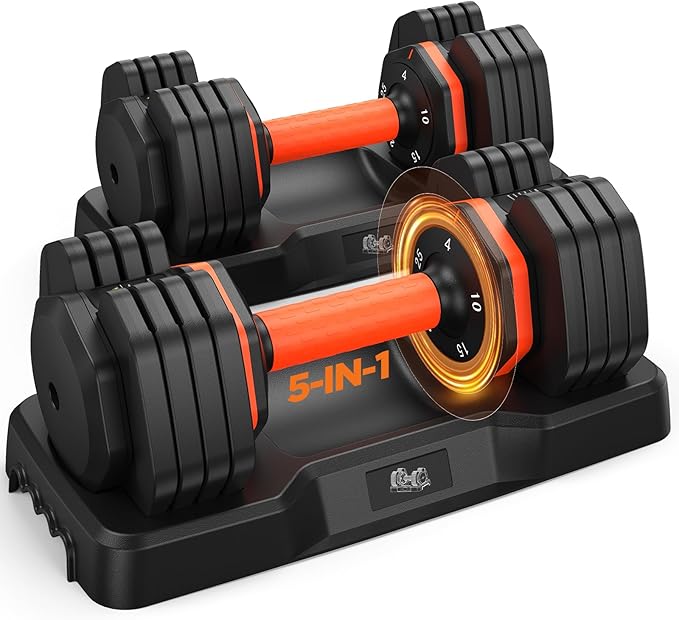
| Rendpas Quick-Lock | ~52 lb | 5.5 lb | B-stance + frog pumps + accessory work |
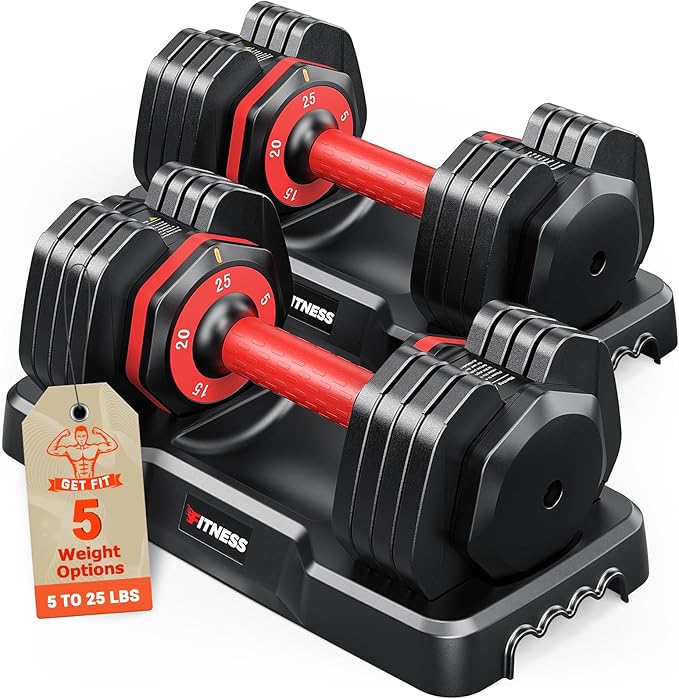
| Amazon Basics 25 lb | 25 lb | 2.5 lb | Constant-tension bridges + glute medius |
BowFlex Results Series SelectTech — best all-around pairing
The dial-based change system is the fastest on the market, which matters when you're running a hip thrust Bulgarian split squat glute-focused row triset and don't want to fumble with collars between sets. The 90 lb top end covers most home lifters' heaviest single-leg hip thrust working weight, and the rounded plate stack means you can pin one across your hip crease for a single-leg bridge without it gouging into you. Check current price on Amazon.
FEIERDUN DS2 20–90 lb with Connector — best for barbell-style hip thrusts
This is the sleeper pick for anyone who doesn't have a barbell yet. The included connector lets you join both 90 lb dumbbells into a single 180 lb short barbell, which is enough loading for most intermediate lifters' barbell hip thrust work — and it sits cleanly across your hips on a -10° decline bench. The 5 lb increments let you progress in the same micro-jumps a competition powerlifter would use. See it on Amazon.
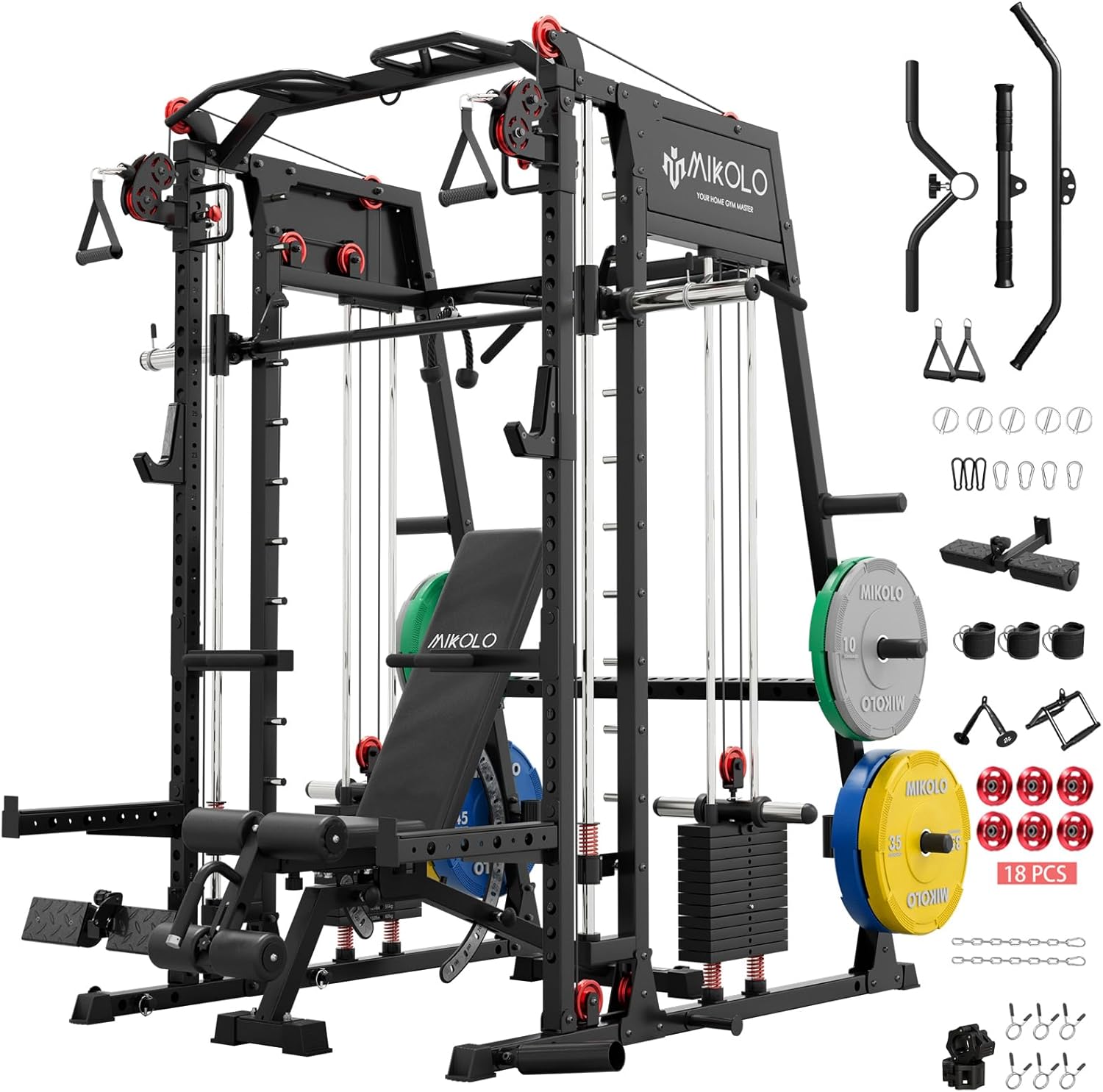
FDB2 110 lb Adjustable Dumbbell Set with Stand — heaviest single-hand option
For advanced lifters whose single-leg hip thrust working weight has already passed 90 lb per side, the FDB2 jumps the ceiling to 110 lb per hand. It ships with a stand, which keeps the loading station at hip height next to your bench rather than on the floor where you'd otherwise have to lift it from a deadlift position every set. The trade-off is a slower plate-swap system, so reserve this for working sets rather than circuits. View on Amazon.
Rendpas Quick-Lock Adjustable Dumbbells — best for accessory and B-stance work
If you already own a barbell for your top hip thrust sets, the Rendpas covers the accessory block that completes a glute session. The quick-lock system handles up to ~52 lb per hand, which is more than enough for B-stance hip thrusts, frog pumps, dumbbell RDLs, and step-ups. Check it on Amazon.
Amazon Basics 25 lb Adjustable Dumbbell — best for constant-tension bridge work
Glute medius work, banded constant-tension bridges, and the high-rep finisher block all benefit from lighter dumbbells with 2.5 lb micro-increments. A single 25 lb adjustable lives next to the bench so you can pin it across your hips for 30+ rep bridge sets without breaking out the big stack. See on Amazon.
Setting up your bench for a barbell hip thrust
The most common mistake people make with a decline-capable bench is using a steep decline angle. The decline setting on a hip-thrust-ready bench is not a sit-up angle — it's there to let your shoulders sit slightly below your hip line at the bottom of the rep, which dramatically increases the range of motion at the hip joint without forcing you to round your upper back. Set the bench to -10° (one notch below flat) for most hip thrust work. Position the pad so the top edge sits at the bottom of your scapula when you're seated against it. Walk your feet out until your shins are vertical at the top of the rep, place the barbell across the crease of your hips with a thick pad or two folded yoga mats, and brace your lats against the pad before you drive.
Programming hip thrusts with an adjustable decline bench
A productive glute-focused session built around the adjustable decline bench glute bridge hip thrust pattern usually looks like this in 2026 program design.
The same bench handles every movement above without rearranging your gym floor. That's the whole point of paying for an FID bench with a usable decline pin instead of a flat utility bench.
Where decline-capable benches fit in your home gym build
If you're starting from scratch, the order most lifters should buy gear in is: power rack with safeties first, then bar and plates, then a decline-capable bench, then adjustable dumbbells. The bench unlocks more exercises than any other single purchase once you have a rack and bar. For more on the rack side of the build, see our budget power rack guide, and for flat-only options if your space won't fit an FID, our flat utility bench roundup covers the heavy-duty picks. The other accessory that pays for itself fast on hip thrust day is a thick barbell pad — see our hip thrust pad picks for what actually protects your hip crease under 315+ lb.
Frequently Asked Questions
What decline angle is best for barbell hip thrusts?
-10° is the sweet spot for most lifters. Steeper than -15° turns the lift into a half sit-up and removes the glute focus. -10° drops your shoulders just below hip height at the bottom of the rep, which adds about 4–6 inches of hip range of motion without compromising your upper-back brace.
Can I do hip thrusts on a flat utility bench instead of a decline bench?
Yes, and millions of lifters do. The downside is the bench will rock backward under heavy loads, your shoulders sit higher than ideal (shortening hip range of motion), and you can't superset incline work without buying a second bench. A decline-capable FID bench solves all three problems for $100–$300 more than a flat-only bench.
Do I need a hip thrust pad or is the bench pad enough?
Always use a dedicated hip thrust pad once your working weight passes 135 lb. The bench pad is for your back, not your hip crease, and a knurled barbell at 225 lb will bruise your pelvis without a thick pad. Folding two yoga mats works as a short-term substitute, but a purpose-built pad is worth the $30.
Are adjustable dumbbells strong enough for single-leg hip thrusts?
For most home lifters, yes. A 90 lb adjustable dumbbell pinned across one hip in a single-leg hip thrust position is equivalent to roughly 180 lb on a two-leg barbell hip thrust in terms of per-side load. The FEIERDUN DS2 and BowFlex SelectTech both cover this range. Once you exceed 90 lb per side single-leg, switch to barbell B-stance variations.
What is the difference between a glute bridge and a hip thrust?
A glute bridge is performed flat on the floor with your shoulders on the ground. A hip thrust elevates your shoulders on a bench, increasing the range of motion at the hip by roughly 4–6 inches and shifting more tension to the gluteus maximus. Both belong in a glute program; the bench-supported version is usually the heavier compound, and floor bridges work as a high-rep finisher.
How much weight capacity should an adjustable decline bench have for hip thrusts?
Look for a rated capacity of at least 1000 lb. Real-world hip thrust loading includes your bodyweight pushed through the bench at lockout, plus the barbell on your hips, plus dynamic load (acceleration multiplies static weight by 1.3–1.5x). A 600 lb capacity bench will flex visibly under a 315 lb hip thrust by a 200 lb lifter.
Can I use a Smith machine instead of a barbell for hip thrusts on a decline bench?
You can, and the fixed bar path actually makes setup easier for beginners. The downside is the Smith machine forces a vertical bar path, while a free barbell hip thrust travels in a slight arc as your hips rotate. Most experienced glute-focused lifters prefer the free barbell for the more natural movement pattern and the additional stabilizer recruitment. For more on dumbbell vs barbell programming for posterior chain work, see our glute training dumbbell guide.
Key Takeaways
- Choosing the right adjustable decline bench glute bridge hip thrust means matching capacity and output ports to your actual devices
- Always check actual watt-hours (Wh), not just watts — runtime depends on Wh, not peak output
- Also covers: best bench hip thrusts home
- Also covers: decline bench glute training
- Also covers: adjustable bench hip thrust setup
- Compare price-per-Wh across models to find the best value for your budget